How are Boxing Gloves and Kickboxing Gloves Different?
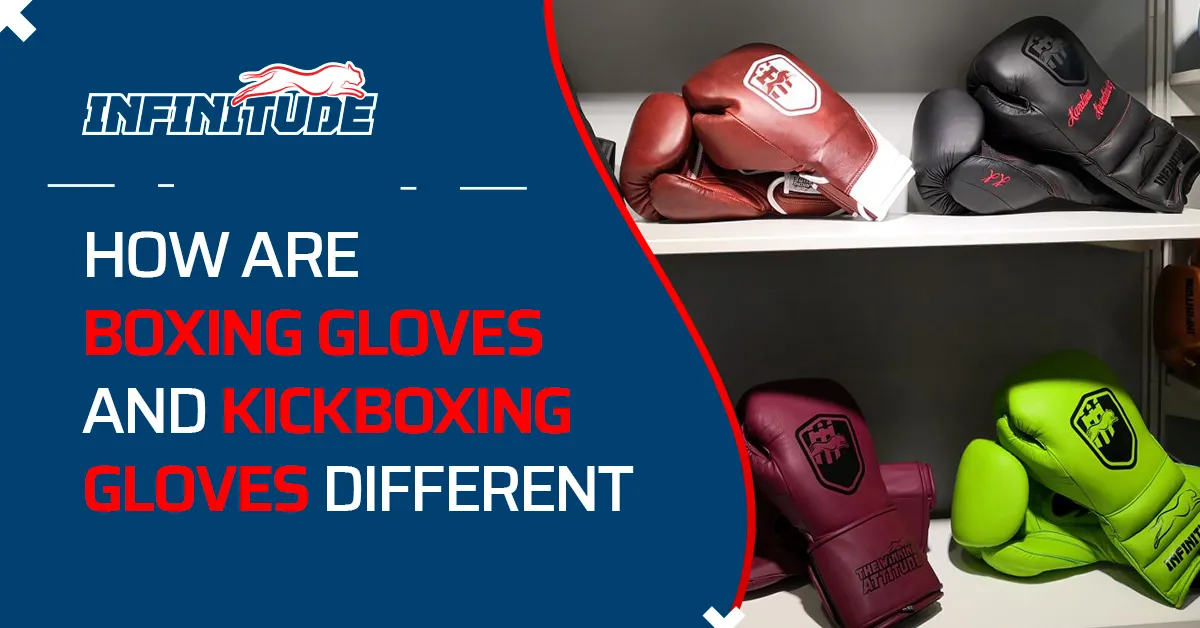
Boxing gloves have a fixed thumb position and a rounded shape for punching, while kickboxing gloves have a flexible, straighter thumb and extra top padding for blocking kicks. If you throw a powerful punch, a boxing glove locks your wrist straight to keep it safe from impact. But if you are sparring in kickboxing and an opponent throws a roundhouse kick at your ribs, a rigid boxing glove makes it hard to open your hand and trap the leg. A kickboxing glove gives you the flexibility to easily catch, parry, or deflect that incoming
Whether you’re working on combinations in the ring or training with kicks, clinches, and defensive drills, the right glove should match how you train. Explore Infinitude Fight’s Boxing Gloves and Kickboxing Gloves to find the right fit, padding, and support for your sport.
Kickboxing Gloves Vs. Boxing Gloves
| Feature | Boxing Gloves | Kickboxing Gloves |
| Shape | Rounded at the fingers for a tight, clenched fist | Squarer profile, more open at the palm |
| Padding | Concentrated on the knuckles | Spread more evenly, denser on the back of the hand |
| Cuff and Wrist Support | Longer, tighter cuff, locks the wrist | Shorter, looser cuff, trades support for mobility |
| Grip Bar | Internal bar holds the fist clenched | No grip bar, hand stays open for clinching |
| Thumb | Tucked close, secured behind knuckle padding | Straighter and looser, molded for grip |
| Sizing | 8oz to 20oz | 8oz to 20oz, same weight distributes differently |
| Best For | Bag work, boxing sparring, competition | Clinch work, catching kicks, Muay Thai and kickboxing sparring |
Kickboxing and Boxing Gloves are Built for Different Fights
Boxing is a hands only sport. Every part of a boxing glove’s design serves repeated punching, nothing else. Kickboxing adds feet, clinching, and catching kicks into the mix, so a kickboxing glove has to do more than protect the knuckles. That single difference in what each sport actually demands from the hand is where every other difference between the two gloves starts.
Boxing Gloves are Round While Kickboxing Gloves More Square
Boxing gloves are rounded at the fingers so a boxer can form a natural, tightly clenched fist, since a well-clenched fist is what actually lands a powerful punch. The cuff runs longer too, closed with Velcro or a lace-up closure, so the glove works as a natural extension of the forearm and locks the wrist in place. Shape varies somewhat by brand, some run rounder, others flatter or more angular near the fist, but every design is chasing the same goal, a secure, tightly clenched fist built for fast combinations.
Kickboxing gloves share a similar base shape but trade some of that rounding for a squarer profile. They’re less efficient for fast punching combos, since the design prioritizes an open, flexible hand over the tightest possible fist. Most kickboxing gloves also use a shorter cuff, open up more at the palm, and skip the palm mesh panel many boxing gloves use for ventilation.
Boxing Gloves Focus Padding on the Knuckles but Kickboxing Spreads it Out
Boxers throw one power punch after another, almost entirely through the knuckles, so boxing gloves concentrate padding right there. Palms and wrists get comparatively little cushioning, though lace-up models sometimes add a bit more to make up for what a Velcro strap provides on the other style.
Kickboxing gloves spread padding more evenly across the whole hand instead. Knuckle and thumb padding run lighter than a boxing glove’s, but the backside of the hand gets noticeably denser cushioning, since kickboxers need real protection from blocking and catching kicks, not just throwing punches.
Kickboxing Gloves are Flexible Unlike Boxing Gloves
Boxing gloves are built stiffer on purpose. The bigger, tighter cuff restricts wrist flex when a punch lands, which helps keep the wrist safe through repeated power shots.
Kickboxing gloves flex more, especially through the fist. Clinching and catching kicks both require a hand that can open and close freely, so kickboxing gloves skip the internal grip bar that holds a boxing glove’s fist in a fixed clench. A fast way to tell the two apart is to try opening your hand inside the glove. If it barely moves, it’s a boxing glove.
Boxing Tucked Thumbs vs Kickboxing Thumb Movement
A boxing glove’s thumb sits tucked close to the fist, secured behind the knuckle padding or attached directly to the hand panel with a leather strip. Keeping the thumb out of the way of impact is the whole point, since an exposed thumb takes real damage over a career of punches.
Kickboxing gloves mold the thumb straighter and looser instead, since a looser thumb makes gripping, clinching, and catching kicks easier. What you actually train should decide which thumb design you buy, since it says a lot about which sport a pair is really built for.
Boxing vs Kickboxing Weight and Padding
Both glove types size the same way, in ounces, typically running from 8oz up to 20oz. 10oz gloves suit pad and bag work best, 14oz and up cover most sparring, and heavier fighters or cautious beginners often size up toward 16 to 20oz.
The ounce number tells you how much padding sits inside the glove, more ounces means more protection and less speed, but it doesn’t tell you where that padding actually sits. A 14oz boxing glove and a 14oz kickboxing glove protect different parts of the hand at the exact same listed weight, which is why matching the glove to the sport still matters even once you’ve picked the right size.
Can You Use the Same Gloves For Boxing and Kickboxing?
Yes, you can use the same gloves for both boxing and kickboxing, especially if you are a beginner or training for fitness. But the choice varies based on the situation.
When You Can Share Gloves
- Bag and pad work – Standard training gloves work fine for hitting heavy bags or pads in both sports.
- General fitness – If you do cardio kickboxing or casual gym workouts, a good all purpose pair saves money.
When You Need Separate Gloves
- Sparring – Dedicated sparring gloves require softer, pillowy padding to protect your partner.
- Competition – Official events have strict rules requiring specific glove designs or lighter weights, such as 8oz or 10oz, that are approved for that exact sport.
Key Takeaways
- Boxing gloves lock the wrist and concentrate padding on the knuckles, built for repeated straight punching.
- Kickboxing gloves use a shorter cuff, more evenly spread padding, and no grip bar, so the hand stays open for clinching and catching kicks.
- The core shape stays the same across both, but boxing gloves round out for a tight fist, while kickboxing gloves square off for flexibility.
- Both glove types size in ounces from 8oz to 20oz, though the same weight distributes padding differently depending on the glove.
- Sharing one pair works fine for bag work, pad work, or general fitness, sparring and competition call for dedicated gear.
- Every design difference traces back to one thing. Boxing only needs to protect a fist, kickboxing needs a hand that can also open, catch, and clinch.