Best Boxing Workouts for Fitness and Weight Loss
The best boxing workouts for fitness and weight loss combine five core drills into one session. These include shadowboxing, heavy bag or double-end bag rounds, mitt work, jump rope, and core exercises such as crunches. Together, they work the upper and lower body, improve cardiovascular endurance, and can burn a significant number of calories during a session. This combination makes boxing a well-rounded workout for improving fitness while supporting weight-loss goals.
According to Harvard Health Publishing, a 155-pound person burns about 324 calories in just 30 minutes of boxing sparring, which works out to well over 600 calories an hour at that intensity. That is part of why boxing has become such a popular fitness choice beyond the ring.
Boxing also triggers what exercise scientists call the afterburn effect, or excess post-exercise oxygen consumption. According to the American Council on Exercise, high intensity workouts like boxing keep your metabolism elevated for hours after you finish training, which means you continue burning calories well after you leave the gym.
Boxing builds strength, speed, and endurance all at once, which is hard to find in a single workout style.
How Boxing Combines Strength, Cardio, and Athletic Conditioning
Boxers and MMA athletes are some of the leanest, most well-conditioned athletes in sport. Their training focuses on the core, back, legs, and upper body, building strength and maximising endurance at the same time. This full-body demand is exactly why boxing translates so well into a fitness program, even for people who never plan to step into the ring. A structured training plan, like the steps outlined in how to train for a boxing match, helps you build real conditioning instead of just working up a sweat.
For the best results, work through a consistent mix of boxing drills that cover different levels of difficulty. You can train with simple equipment such as a heavy bag, or even without one, along with free weights and other basic gear.
Building a Complete Boxing Workout Routine
A boxing workout can be as versatile as you want it to be. You can combine several techniques and build a routine that fits the exact purpose of your training.
Boxing and other forms of MMA training can feel intimidating and intense at first, but the payoff in strength, conditioning, and confidence makes it worth the effort.
What You Need Before You Start Boxing Training
You do not need a full gym setup to get real results from boxing training. A basic setup includes:
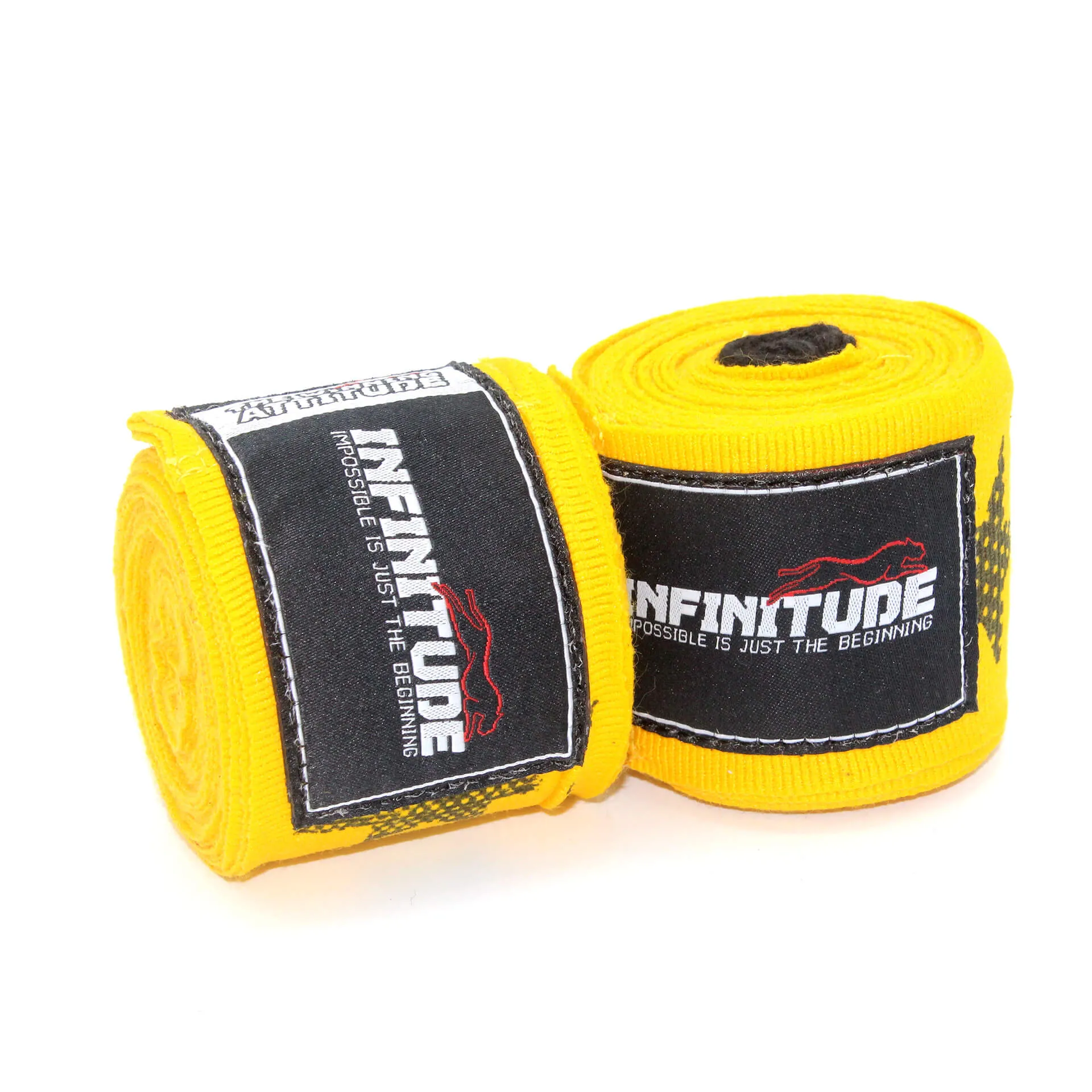
- Hand wraps, to protect your wrists and knuckles
- A pair of quality boxing gloves
- A heavy bag, if you have space, though many drills work without one
- A jump rope
- A mouth guard and head guard if you plan to spar
Once you have the basics, you can build a full routine using the drills below.
Sparring as Part of a Complete Boxing Workout
Sparring is one of the most demanding boxing workouts, combining controlled punching with a fast, reactive training pattern. Sparring closely emulates real fighting scenarios, which is why trained fighters tend to have a clear advantage over untrained opponents once they step into live rounds.
While sparring, you get the full benefit of cardiovascular training along with real strength gains, since you are working nearly every accessible muscle group through twisting, pivoting, and quick footwork.
Sparring also demands that you put your mind and body to work together, reading and reacting to your opponent’s movement in real time. This is why intense focus is essential for timely responses during training and sparring.
The sparring workout is fast-paced and demanding, often giving you little room to catch your breath between exchanges.
How to Stay Safe While Sparring?
Making sparring safer and more controlled is a common goal for any fighter. No gear can make combat sports completely risk-free, but the right equipment significantly reduces that risk.
Using proper sparring gear, including a mouth guard, boxing gloves, head guard, and groin guard, drastically lowers the chance of injury. Sparring gloves are also typically padded more heavily than the gloves used in professional boxing matches, since the goal in training is skill development, not knockout power.
Who Can Practice Sparring?
Sparring is usually not recommended for complete beginners, even though the drill itself can be exciting and highly effective once you are ready for it.
Most coaches advise building a solid foundation in technique, footwork, and conditioning first. Once that foundation is in place, sparring becomes one of the most valuable tools for turning learned skills into real, reactive ability.
Benefits of Sparring
Sparring brings a wide range of benefits beyond just practice rounds
- Works as a full-body strength and conditioning session
- Builds cardiovascular endurance
- Strengthens the connection between mind and body under pressure
- Refines technique and builds real fighting experience
Mitt Work for Technique, Timing, and Accuracy
Mitt work is one of the most valuable drills for learning new technique. Similar to sparring, it lets you practice offense and defense side by side, but with far more control. Mitts are especially useful in a beginner boxing workout routine.
A coach or partner holds the mitts while you work through combinations, which adds the benefit of direct, real time feedback.
Through repeated mitt work, a fighter builds automatic reflexes that translate directly into live fighting scenarios. Mitt training also lets you safely practice a wide range of combinations you would otherwise only use in a real match.
Benefits of Mitts
Regular mitt work delivers benefits that carry directly into your overall boxing performance
- Builds confidence and helps break the natural fear of throwing and taking punches
- Improves power and agility for countering an opponent
- Sharpens accuracy and timing for real fight scenarios
- Develops a feel for range and distance, improving both offense and defense
- Simulates the flow of a real fight in a controlled setting
- Builds a strong working relationship between fighter and coach, which becomes increasingly valuable as your skill level grows
Fighters who consistently avoid pushing themselves during mitt work tend to struggle far more once they face a live opponent.
Shadowboxing for Technique, Movement, and Conditioning
Shadowboxing is a foundational boxing drill that also works as a complete standalone workout on its own.
Shadowboxing builds cardio and endurance while sharpening the technique you will rely on in every other drill on this list.
It is often underrated as a workout, mostly used as a warm up before a heavier session. In reality, shadowboxing raises your heart rate and works your muscles just as effectively when done with intention.
What is Shadowboxing?
In a shadowboxing drill, you move around open space throwing punches at an imaginary opponent, simulating a real fight without any equipment.
Shadowboxing is also an effective calorie-burning workout for anyone looking to get in shape, and it doubles as a way to sharpen defensive skills.
Benefits of Shadowboxing
Because it requires no equipment or partner, shadowboxing offers a wide range of benefits that fit into almost any schedule
- Improves footwork and stance while you build new skills
- Builds muscle memory through repetition
- Sharpens technique across punches, footwork, and defensive movement
- Builds awareness of positioning and how to react to it
- Develops the focus needed to stay sharp in the ring
Shadowboxing, in short, works almost like a moving meditation and visualization exercise for a fighter.
Double-End Bag Training for Speed, Accuracy, and Timing
Sitting between the speed bag and the heavy bag is the double end bag, a favorite boxing workout for beginners looking to lose weight and sharpen accuracy. The double end bag, also called a floor-to-ceiling bag, is anchored to both the floor and ceiling with elastic cords.
Compared to more common bag types, the double end bag is considerably harder to hit consistently. That difficulty is exactly what makes it valuable, since it forces you to sharpen timing, rhythm, and accuracy all at once.
Professionals use this drill often, but at Infinitude Fight, we recommend beginners get familiar with it early, since it builds a real edge over less experienced opponents.
How Does a Double End Bag Work?
Unlike a standard heavy bag drill, working the double end bag keeps you moving constantly and helps develop hand speed and arm endurance. Every fighter benefits from being fast enough to stay ahead of an opponent, which makes it a valuable part of shaping a complete boxer.
Benefits of Double End Bag Training
This drill sharpens several skills at once, which is why it remains a favorite among experienced fighters
- Improves cardiovascular strength and helps the arms throw faster, sharper punches
- Sharpens fighting rhythm and overall accuracy
- Polishes punching mechanics along with other power based reflexes
- Trains you to stay alert and keep your guard up while engaged
- Lets you punch with real intent while still working on precise timing and speed
Jump Rope for Endurance, Coordination, and Footwork
Jump rope is one of the best exercises for building overall conditioning and body control. It teaches beginners and intermediate fighters alike how to use muscle strength efficiently and then relax immediately after, a skill that carries directly into a real boxing workout.
Why Use a Jump Rope?
Both professionals and beginners treat jump rope as a core part of a complete training routine, since it builds footwork, conditioning, and strength all at once.
Jump ropes are considered one of the most valuable tools in combat sports, and elite athletes across nearly every sport use them as part of their warm-up and cool-down.
Benefits of Jumping Rope
Consistent jump rope work builds a wide range of skills that carry over into every other part of your training
- Improves endurance
- Builds coordination between the upper and lower body
- Develops controlled breathing and relaxation under fatigue
- Sharpens footwork and technique
- Builds punching power and the stamina needed to throw combinations
- Supports full body conditioning
Core Training for Boxing Strength and Stability
Beyond boxing-specific drills, core exercises are essential to nearly every sport, since the core connects and supports the rest of the body. Crunches, as a focused core exercise, help build muscular force through a single, controlled movement. Boxing depends heavily on full body output and coordination, which makes core strength a direct performance factor.
Building a stronger core allows you to throw harder punches, move with better balance, and maintain quicker footwork throughout a round.
A strong, stable core also helps you absorb an opponent’s shots without losing your balance or footing.
An explosive, high-level fight nearly always comes down to a well built core.
A Simple Boxing Workout You Can Follow
If you are putting these drills together for the first time, a basic structure keeps you from overtraining or missing key areas. A simple beginner session might look like this:
- 5 to 10 minutes of jump rope as a warm up
- 3 rounds of shadowboxing, 2 to 3 minutes each
- 3 to 4 rounds on the heavy bag or double end bag
- 2 rounds of mitt work, if you have a partner or coach
- 5 to 10 minutes of core work, including crunches
- A short cool down and stretch
As your conditioning improves, you can add rounds, shorten rest periods, or work sparring into the routine once your coach feels you are ready.
Conclusion
The best boxing workouts combine technique, cardio, strength, and conditioning. Mix shadowboxing, bag work, mitts, jump rope, sparring, and core training to keep your sessions challenging and well-rounded.
Start with the drills that match your fitness level, then increase your rounds and intensity as you improve. With the right routine and reliable gear, boxing can become a powerful part of your fitness plan.
Find the boxing gloves and training gear you need at Infinitude Fight and take your next workout further.
FAQs
What is the best boxing workout for beginners?
Shadowboxing and jump rope are the best starting points for beginners, since both build core technique and conditioning without requiring a partner or heavy equipment.
How many calories does a boxing workout burn?
A typical hour of boxing training can burn well over 500 calories, depending on intensity and how much of the session involves bag work versus lighter drills like shadowboxing.
How often should beginners do boxing workouts?
Most beginners see solid progress training 3 to 4 times per week, which allows enough recovery time between sessions while still building consistency.
How long should a boxing workout be?
Most beginner sessions run 30 to 45 minutes, including warm up and cool down. As conditioning improves, many fighters extend training sessions to 60 minutes or more.
Does boxing build muscle or just burn fat?
Boxing does both. The constant punching, footwork, and core engagement build lean muscle in the shoulders, back, and legs, while the high-intensity nature of the workout burns fat at the same time. It will not build bulk the way heavy weightlifting does, but it does noticeably improve muscle tone and definition.